

BENCZE BIRTOK
HUNGARY | BADACSONY
István founded his estate on the renowned Szent György-hill in 2011, and by 2013, it expanded to 18 hectares. Committed to organic and, from 2015, biodynamic practices (Demeter certified), he has focused on exploring Hungary's ancient grape varieties and the unique potential of his land. His vineyards span three distinct plots on the southern slopes of the mountain, with his crown jewel, the Templomdombi vineyard, standing out for its mineral-rich basalt soil.
The terroir, a mix of volcanic basalt, tuff, Pannonian sandstone, and brown forest soil, offers an exceptional environment for varieties such as Riesling, Pinot Noir, Kék Bakator, Furmint, Hárslevelű and Kéknyelű. István’s philosophy centres on fostering a semi-wild equilibrium in the vineyard, where plants develop a natural relationship with their surroundings to produce the finest raw material.
In the cellar, István follows a minimalist approach, using gravity techniques and traditional methods like amphora and barrels. With no filtering or clarifying, and a complete removal of sulfur since the 2018 vintage, his wines are a pure reflection of the terroir – elegant, authentic, and deeply rooted in the land’s rich history.

An elegant, quietly powerful Blanc de Noirs with remarkable depth and composure. The nose opens with white peach, preserved lemon and delicate white blossom, layered over a creamy, long-lees complexity. Subtle brioche and fine autolytic notes intertwine with volcanic minerality. On the palate, mouth-coating stone fruit and citrus are held in perfect balance by a delicate mousse and beautifully refined bubbles. The finish is precise, saline and persistent. An aged, Champagne-method Brut Nature that delivers far beyond its weight — poised, serious and effortlessly complete.
Winemaker | István Bencze
Region | Badacsony, Hungary
Variety | Pinot Noir (Blanc de Noirs)
Viticulture | Biodynamic (officially certified from 2018)
Soil | Volcanic basalt and tuff with brown forest soil and clay
Altitude | 180 m
Age of the vines | 11 years
Bottles made | 5000 bottles
Vinification
Hand-harvested and direct pressed. Two-thirds fermented in stainless steel, one-third in amphora. Traditional method, Brut Nature (no dosage). Disgorged in 2025 after nearly ten years on the lees. Uncompromising patience has shaped both its texture and finesse.
A mature, volcanic Blanc de Noirs of precision, creaminess and extraordinary length.

A must for every adventurous Riesling lover, this wine captures both precision and evolution in equal measure. The 2023 vintage, shaped by a warmer growing season and a later harvest, brings a gentler, more open expression compared to previous years — with a rounder acidity profile and a delicate thread of elegant botrytis complexity woven into the fruit.
The nose is vivid and expressive, unfolding with citrus zest and crushed wet stone, layered with subtle smoke and fine herbal tones. There is a quiet depth to the aromatics, where ripeness meets tension in a beautifully balanced way. On the palate, the wine is both lively and supple, with juicy lemon, white peach and ripe orchard fruit carried by a softened, more flowing acidity. Amphora ageing adds texture and gentle breadth, giving shape without weight while preserving clarity and drive.
The finish is long and mineral, marked by a distinct flinty edge that speaks directly of volcanic soils — a pure, nuanced expression of site, season and careful hands in the cellar.
Winemaker | István Bencze
Region | Badacsony, Hungary
Variety | Riesling
Viticulture | Biodynamic (officially certified from 2018)
Soil | Volcanic basalt and tuff with brown forest soil and clay
Altitude | 180 m
Age of the vines | 15 years
Bottles made | 3400 bottles
Vinification
Only perfectly healthy bunches were gently pressed in whole bunches. After pressing, the juice fermented and aged in clay amphoras for 10 month on the fine lees. Bottled unfiened, unfiltered without the additon of So2
2018 was a warm vintage that brought the harvest to the earliest ever 30st of August. The excessive rain caused tropical like conditions that made the plant protection very challenging and naturally halved the entire yield
2019 was a colder year compared to ‘18 that resulted in linear feminin style of wine
2020 was a warmer vintage somewhere in between ‘19 and ‘20 with not a lot of rain. Resulted in thicker skin and lower juice to fruit ratio. What it means in the finished wines is that you will experience deeper and more diverse aroma profiles and rounder acidity.
2021 was cold, wet year with lot disease pressure naturally reducing the yield, resulting in mineral, linear focused wines with great ageing potential.
2023 Was a warm year, with later harvest compared to 2021 and 2022, resulting in a rounder acidity profile and elegant botrytis notes
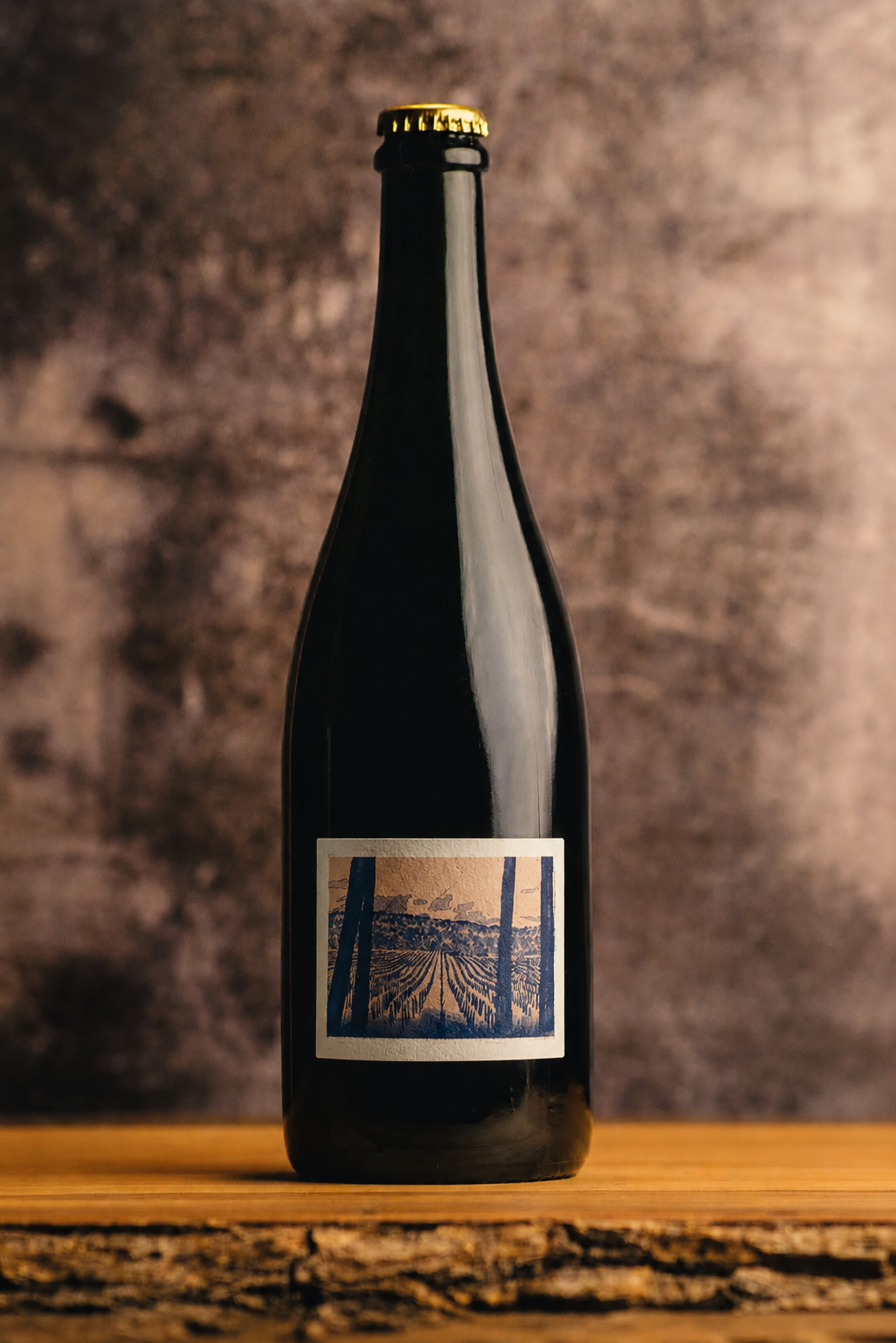
Sourced from a remarkably cool, western-facing site in Várvölgy, this Pinot Gris captures a distinct sense of place shaped by altitude, forest influence and volcanic proximity. Aromatically expressive yet finely tuned, it opens with dried apricot, ripe orchard fruit and subtle floral tones, lifted by a delicate reductive edge. The palate is textured and energetic, balancing gentle creaminess with vibrant acidity and a precise saline minerality. A faint natural CO₂ adds freshness and tension, while a touch of residual sugar rounds the edges without losing focus. Complex, savoury and quietly powerful, this is Pinot Gris with real depth and character.
Winemaker | István Bencze
Region | Várvölgy, Balaton, Hungary
Variety | Pinot Gris
Style | White
Viticulture | Organic / Biodynamic conversion (from 2022)
Soil | Humus-rich, clay-dominant soils with high mineral content
Altitude | 208–250 m
Age of vines | Planted 2003
Vinification
The Pinot Gris is sourced from the Várvölgy plot, planted in 2003 located just west of the Szent György-hegy. The site’s cooler microclimate, forest exposure and clay-heavy soils contribute to a slower and longer ripening season resulting in a naturally expressive aromatic profile. Grapes are vinified gently, with fermentation and élevage taking place in 500-litre oak barrels. The wine is bottled with crown cap, retaining a small amount of natural CO₂ and approximately 5 g/L of residual sugar, preserving freshness and enhancing tension. A lightly reductive profile supports the fruit purity, resulting in a textural, mineral-driven wine with striking balance between ripeness and precision.

A powerful, richly layered Chenin Blanc that shows István’s deep affection for the Loire while remaining unmistakably shaped by the volcanic slopes of Szent György-hegy. This 2022 release comes from a later, riper harvest and reflects a style closer to his beloved 2020 vintage — broad, long, and complex, with a subtle oxidative edge that beautifully complements the wine’s intense fruit. The nose opens with ripe citrus oil, baked quince, white peach and almond cream, lifted by hints of lanolin and dried herbs. On the palate, the wine is full and expansive, with impressive length and texture. Notes of yellow apple, bruised pear, mandarin zest, and toasted nuts mingle with a lightly oxidative character, while a touch of volatile lift is already integrating gracefully. Chalky minerality and electric acidity tighten the finish, giving precision to this deep, gastronomic Chenin. A must-try for lovers of the richer, more oxidative Loire expressions.
Winemaker | István Bencze
Region | Badacsony, Hungary
Variety | Chenin Blanc
Viticulture | Biodynamic (certified since 2018)
Soil | Volcanic basalt, sandstone & clay
Altitude | 180 m
Age of the vines | Planted 2014 (10 years)
Bottles made | 1300 bottles
Vinification
The Chenin was harvested in three passes — 5, 8, and 12 September 2022 — from the vineyards surrounding the Vinotéka. After gentle whole-bunch pressing in a Scharfenberger pneumatic press, the must was transferred to a mix of second-fill Chassin and Boutes Soleil Burgundy barrels plus an old, well-seasoned 228 L barrique. Fermentation began strongly, then slowed, continuing under a thin veil of yeast (flor) until October 2023, with occasional topping only at key moments.
Following élevage in these smaller barrels, the lots were blended and moved in August 2023 into a 1500 L Garbelotto oak cask, where the wine rested undisturbed until bottling on 4 September 2024. No fining, no filtration, and no added SO₂ — allowing the wine’s ripe fruit, oxidative hints, and innate volcanic precision to shine with absolute honesty.

This Kéknyelű is a powerhouse in a bottle. The nose bursts with the freshness of freshly cut daisies, paired with lively lemon sherbet and ripe white peach, offering a zesty, aromatic profile that’s both delicate and bold. Aged in amphora, it delivers an incredible tension on the palate, balancing bright acidity with a flinty mineral backbone that echoes the volcanic terroir. With a full-bodied structure and remarkable longevity, it’s like a hulking force trapped in a tiny bottle, leaving an impression of power, finesse, and potential that lingers long after the last sip.
Winemaker | István Bencze
Region | Badacsony, Hungary
Variety | Kéknyelű
Viticulture | Biodynamic
Soil | Dense volcanic basalt with some tuff, sandstone, brown forest soil and clay
Altitude | 180 m
Age of the vines | 5 years
Bottles made | 1500 bottles
Vinification
In the end of September the grapes were harvested in multiple steps to catch the perfect ripeness. After slow, gentle whole-bunch pressing the grapes are transferred to clay amphoras where they ferment and age for 10 months. This wine is the blend of the three most powerful and electric amphoras. Was bottled mid of July unfined, unfiltered and without the addition of SO2

Bursting with vivid citrus energy and underpinned by a precise, flinty minerality, this is a Furmint that delivers both clarity and intrigue in equal measure. The 2023 vintage brings an added layer of complexity, shaped by subtle noble botrytis influence that weaves through the wine in delicate, expressive tones — adding hints of dried herbs, black tea, and soft honeyed depth without ever losing freshness or definition.
The aromatics are striking yet refined, moving from lime zest, grapefruit peel and ripe peach into more nuanced layers of chamomile, orchard blossom and gentle spice. On the palate, the wine is linear yet textured, with a crystalline core of acidity balanced by a quiet, almost waxy richness from the botrytised fruit. The result is tension and softness in constant interplay.
The finish is long, saline and mineral-driven, with a lingering herbal complexity that keeps unfolding. A deeply captivating expression of Furmint — precise, energetic, and quietly profound, with real ageing potential.
Winemaker | István Bencze
Region | Badacsony, Hungary
Variety | Furmint
Viticulture | Biodynamic
Soil | Dense volcanic basalt with some tuff, sandstone, brown forest soil and clay
Altitude | 180 m
Age of the vines | 10 years
Bottles made | 1200 bottles
Vinification
In the beginning of September the grapes were harvested in multiple steps to catch the perfect ripeness. After slow, gentle whole-bunch pressing the grapes are transferred to clay amphoras where they ferment and age for 24 months. This wine is the blend of the three best amphoras. Was bottled mid of July unfined, unfiltered and without the addition of SO2

A singular expression of old-vine Riesling from Badacsony, shaped by time, patience and the quiet influence of flor. Aromatically, it opens with layers of white peach, nectarine and citrus blossom, unfolding into jasmine, dried herbs and a fine volcanic minerality. What sets this vintage apart is its extraordinary élevage: 4.5 years in amphora under flor, building remarkable depth, texture and savoury complexity while preserving tension and precision. The palate is creamy yet electric, driven by a piercing acidity and a long, saline finish. Powerful, contemplative and deeply original, this is Riesling pushed into a completely different dimension.
Winemaker | István Bencze
Region | Badacsony, Hungary
Variety | Riesling
Viticulture | Biodynamic
Soil | Dense volcanic basalt with some tuff, sandstone, brown forest soil and clay
Altitude | 180 m
Age of the vines | planted in 1972
Bottles made | 1200 bottles
Vinification
Hand-harvested during the Aries phase of the lunar cycle in September, the grapes undergo a slow and gentle whole-bunch press before being transferred to amphora. Fermentation and maturation take place over 4.5 years under a veil of flor, a rare élevage that adds savoury complexity, texture and oxidative nuance while preserving freshness and structure. The wine is bottled unfined, unfiltered and without the addition of SO₂, capturing a pure and uncompromising expression of both terroir and time.

Fresh and fruit-driven, this young Kékfrankos opens with bright notes of raspberry, damson, and wild herbs, lifted by a touch of black pepper. The palate is light, juicy, and effortlessly drinkable, carried by a vibrant acidity that gives the wine its signature energy. There’s a purity and delicacy here that is unmistakably István — a gentle hand guiding a vivid expression of Badacsony’s volcanic soils. A joyful, elegant red that remains wonderfully approachable while hinting at the potential of this young vineyard.
Winemaker | István Bencze
Region | Badacsony, Hungary
Variety | Kekfrankos (Blaufrankisch)
Viticulture | Biodynamic
Soil | Volcanic Basalt and Clay
Altitude | 130 m
Age of the vines | 5 years
Bottles made | 3000 bottles
Vinification
This wine comes from the second harvest of a young 2017 plantation, composed of three Kékfrankos clones: the Austrian A4, the Ruszt-based Triebaumer selection, and a clone selected by the Szentesi–Losonci partnership. After a mid-September harvest, the grapes were hand-destemmed and fermented on the skins for eight days with extremely gentle extraction before being pressed in a pneumatic press. The wine was aged in two third-fill 228 L French barrels for 10 months, then bottled directly without fining, filtration, or the addition of SO₂.

The nose bursts with vibrant aromas of wild red berries, sour cherries, and a touch of earthiness, wrapped in subtle herbal and floral notes that speak to the biodynamic viticulture. On the palate, it is lively and fresh, with a distinctive minerality from the dense volcanic basalt soil. The wine’s texture is refined, its tannins soft yet persistent, balanced by a refreshing acidity. Layers of red fruit—raspberry, cranberry, and a hint of pomegranate—are complemented by nuanced spices and a light smokiness and a long finish
Winemaker | István Bencze
Region | Badacsony, Hungary
Variety | Kék bakator (47%), Kékfrankos (31%), Hajnos kék (13%), Kadarka (9%)
Viticulture | Biodynamic
Soil | Dense volcanic basalt with some tuff, sandstone, brown forest soil and clay
Altitude | 180 m
Age of the vines | 5-11 years
Bottles made | 5000 bottles
Vinification
The Kék Bakator undergoes a so called “trompette” or flotation fermentation process, with 50% of the juice direct pressed and 50% whole-bunches soaked / floated in the pressed part. The Kékfrankos takes a slightly different route, with half of its juice direct pressed and the other half left in whole-bunch crushed, fermented. The Hajnos Kék is half foot crushed and 50% whole-bunch flotation, while the Kadarka combines 50% crushed juice, 40% hand - destemmed grapes, and 10% whole-bunch fermentation. These distinct grape varieties were harvested separately in mid-September, fermented separately, then masterfully blended in November. The resulting wine matured in three 750L terracotta amphoras for a truly pure expression. Bottled on August 30, 2023, with no filtration, clarification, or sulfur added—just raw, unadulterated brilliance in every bottle.

A true masterpiece, perfect balance between layered red berried fruit and deep herbaceous notes. Each sip is like a mesmerising dream into a forest led by vibrant curiosity. Impossible not to reach for a second glass or bottle…
Winemaker | István Bencze
Region | Badacsony, Hungary
Variety | Pinot Noir
Viticulture | Biodynamic (officially certified from 2018)
Soil | Volcanic Basalt and Clay
Altitude | 180 m
Age of the vines | 21 years
Bottles made | 3000 bottles
Vinification
The grapes for this cuvée have been carefully selected from the upper parts of the vineyard. Only the best bunches were used that were crushed as a whole by feet straight away. During the fermented in open vats for 10 days the cap was gently punched down by hand and feet twice a day for a moderate extraction. Transferred by gravity to a 2500L oak barrel where it stays on the lees for 10 month. Bottled unfined, unfiltered without the addition of SO2.

A feather-light yet deeply expressive Kadarka, capturing the delicate beauty and natural tension of this famously challenging grape. The nose opens with lifted red berries, sour cherry, and rose petals, intertwined with subtle spices and a gentle earthy note. On the palate, the wine is bright, juicy, and wonderfully transparent, its naturally low tannins carried by vibrant acidity and the mineral drive of Szent György-hegy’s volcanic basalt. Raspberry, cranberry, and strawberry tones unfold with hints of exotic spice and a touch of botrytis-derived intrigue — a hallmark of true Kadarka. Graceful, aromatic, and irresistibly drinkable, this is István’s most poetic interpretation of the variety.
Winemaker | István Bencze
Region | Szent György-hegy (Badacsony area), Hungary
Variety | Kadarka
Viticulture | Biodynamic (organic certified HU-ÖKO-02)
Soil | Basalt, clay, forest soil, sand & calcareous bedrock
Altitude | 135–184 m
Age of the vines | Planted 2020 & 2021 (massal selection)
Bottles made | 300 bottles (plus a few magnums)
Vinification
Kadarka — thin-skinned, fragile, and irresistibly charming — demands meticulous selection. The 2023 vintage was harvested in two passes, on 11 and 22 September, with every cluster individually evaluated. Roughly ¼ of the perfect fruit was hand-destemmed or used as whole clusters and fermented directly in stoneware amphorae. The remaining ¾were foot-crushed, settled overnight, and fermented separately in stainless steel. After six days on the skins, the pressed juice was transferred to a 228 L French oak barrel and topped up with the amphora-fermented portion. The wine matured for 11 months, and was bottled in August 2024, unfiltered, unfined, and with no added SO₂.
An exquisitely fragile variety turned into a wine of purity, spice, and quiet depth — perfection found in imperfection, as true Kadarka should be.

A luminous and delicate expression of one of Hungary’s rarest indigenous grapes. Kék Bakator — late-ripening, thin-skinned, and almost lost by the end of the 20th century — thrives here in István’s biodynamic vineyards, yielding a wine of remarkable finesse. The nose opens with wild red berries, sour cherry, and lifted floral tones, layered with subtle herbs and a gentle earthiness. The palate is vibrant and pure, shaped by naturally high acidity and low pH, giving the wine its crystalline tension. Red raspberry, cranberry, and pomegranate notes glide over a fine mineral backbone, carried by the volcanic basalt soils of Szent György-hegy. Feather-light yet complex, this is a beautifully transparent, terroir-driven red — Hungary’s own Poulsard-like gem revived with precision and soul.
Winemaker | István Bencze
Region | Szent György-hegy (Badacsony area), Hungary
Variety | Kékbakator
Viticulture | Biodynamic (organic certified HU-ÖKO-02)
Soil | Dense basalt, clay, sandy-calcareous bedrock
Altitude | 130–135 m
Age of the vines | Planted 2020 & 2021 (massal selection)
Bottles made | 300 bottles (750 ml & a few magnums)
Vinification
The 2023 vintage — the warmest year since 1901, with exceptionally high rainfall — was harvested in two passes. The first harvest on 13 September from the Cseresznyefás plot (0.5 ha, guyot, basalt soils at 130 m) was foot-crushed, and the white juice was settled overnight. The second harvest on 21 September from the Sárgaház plot (135 m, clay–basalt–sandy calcareous soils) was hand-destemmed and fermented with a small proportion of whole clusters for seven days.
Both components were then combined and aged for 11 months in stoneware amphora, allowing the grape’s naturally vibrant acidity, delicate aromatics, and terroir expression to remain untouched. Bottled in August 2024, unfiltered, unfined, and with no added SO₂ — a raw, precise, and beautifully honest rendering of this nearly forgotten Hungarian variety.