

MAURER
SERBIA | SZERÉMSÉG
Oszkàr cultivates 16 ha of land, split between two wine regions, the Subotica in the north and the Srem or Fruška Gora in the central part of Serbia.
As a 4th generation winemaker, Oszkàr respects tradition and is always in the research for ancient winemaking techniques. He loves unique autochthonous grape varieties like Bakator, Kövidinka and Mèzes Fehèr to mention a few. He also nurtures the oldest Kadaka plantation known to mankind, where the vines date back to 1880.
The Subotica wine region is covered with sandy topsoil on a limestone bedrock. The wines from this region are always elegant and lifted.
The essence of the 500 million-year-old Fruska Gora Mountain is its volcanic bedrock resulting in wines with more masculinity, piercing acidity and astonishing minerality.
Oszkàr does everything in the vineyards to protect the grapes organically and as little as necessary in the cellar to let these unique varieties and terroirs shine in the glass.
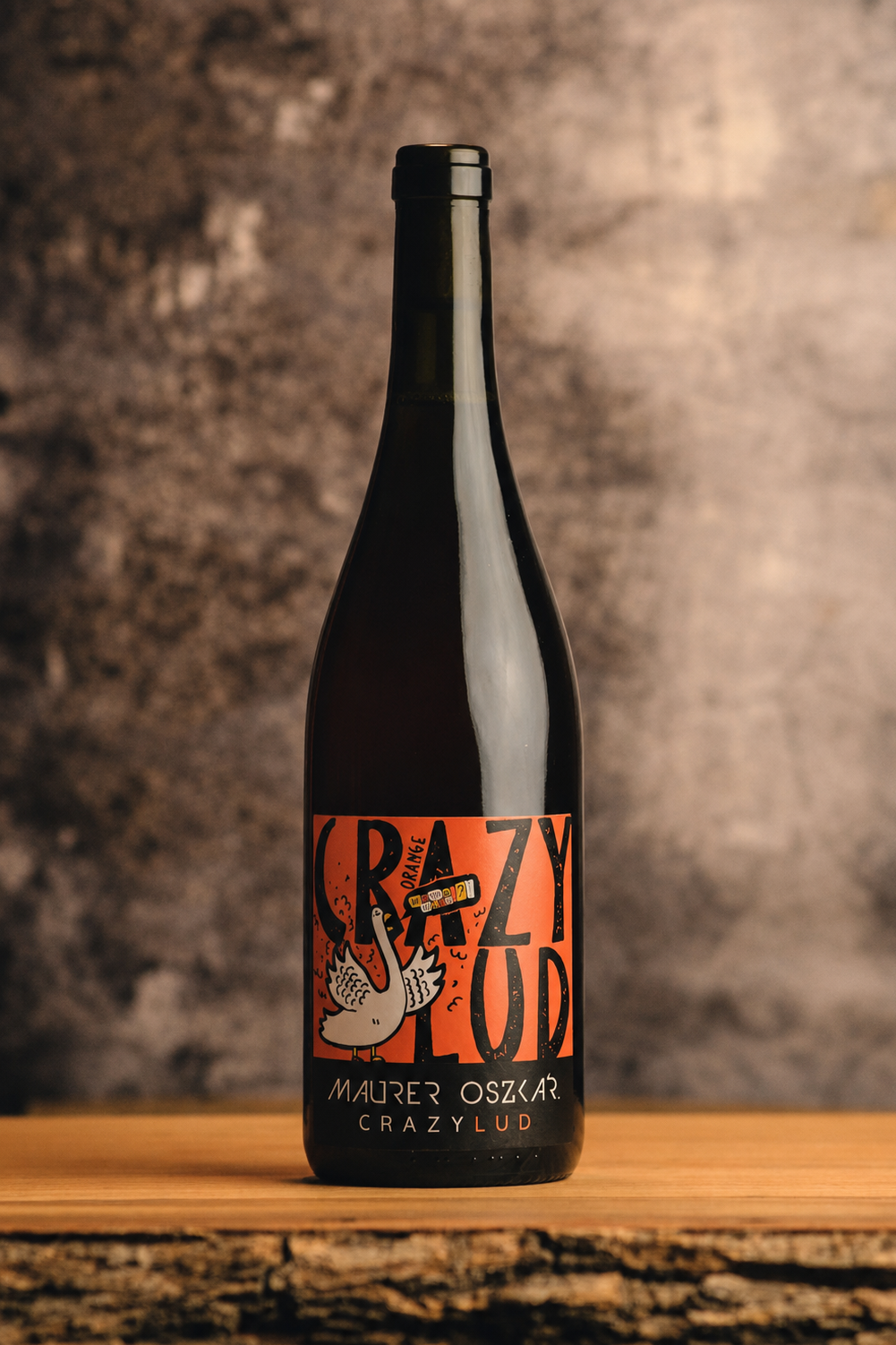
A wonderfully expressive orange wine that combines generosity with remarkable finesse. Aromas of orange peel, quince paste and blossom honey lead into layers of black tea, citrus marmalade and dried herbs. The palate is textured and savoury yet beautifully energetic, with gentle tannins, vibrant acidity and an effortless drinkability that belies its depth. Complex, characterful and astonishing value, this is a wine that comfortably punches well above its weight.
Winemaker | Oszkár Maurer
Region | Subotica, Serbia
Variety | Welschriesling, Bakator, Ezerjó, Slankamenka
Viticulture | Organic
Soil | Sand, Alluvial limestone, Clay
Altitude | 50 - 150 m
Age of the vines | 20- 113 years
Bottles made | 8000 bottles
Interesting Facts
Crazy Lud (named after the Hungarian folk tale character Lúdas Matyi, or "Goose Boy") is Oszkár's flagship field blend and perhaps the best introduction to his distinctive style of winemaking. The wine takes its name from the lake that borders the vineyards in northern Serbia, where many of the ancient, bush-trained vines are still worked by horse because the rows are too narrow for tractors. These old mixed vineyards are a living reminder of how the region was farmed generations ago.
Clay Instead of Wax
Oszkár's fascination with forgotten traditions extends even to the bottle. Rather than using plastic capsules, foil or artificial wax, each bottle is sealed with a layer of natural clay sourced from the vineyard. It's a small but fitting expression of his philosophy—bringing the vineyard right through to the finished bottle.
Opening it is straightforward: insert the corkscrew through the clay, pull the cork halfway, brush away any loose clay, then remove the cork completely and enjoy.
Vinification
The different varieties are harvested together from old field-blend vineyards before being destemmed and macerated on their skins for 7–10 days, building both texture and aromatic complexity. After pressing, fermentation takes place with indigenous yeasts before the wine matures for around 8–10 months in a combination of large old oak barrels and stainless steel tanks, preserving freshness while adding subtle complexity. The wine is bottled without fining or filtration and receives only a minimal addition of sulphur before release.

A wine of extraordinary depth and quiet power, Babba IV reveals itself slowly with each glass. Aromas of mountain herbs, dried chamomile, black tea intertwine with preserved lemon, dried apricot, while subtle notes of rosemary, pine resin and honey emerge with air. The palate is intensely structured yet remarkably poised, driven by a vibrant, almost electric acidity that carries the wine effortlessly despite its immense concentration. Layer upon layer unfolds across the palate before giving way to an astonishingly long, saline finish that echoes with herbs, citrus peel and spice long after the final sip. A truly meditative wine that continues to evolve for hours in the glass.
Winemaker | Oszkár Maurer
Region | Fruška Gora & Subotica, Serbia
Variety | Multiple vintages of Furmint, Bakator, Mézes Fehér & Welschriesling (including botrytised fruit)
Viticulture | Organic
Soil | Sand, loess, clay & limestone
Production | Extremely limited
Interesting Facts
The name Babba comes from ancient Sumerian mythology, where Baba was the goddess of fertility and birth. In the Carpathian Basin, generations later, people prayed to Mária Babba for safe childbirth and new beginnings. Fermenting a wine once is already an act of faith; fermenting it successfully three years in succession demands even more trust in nature. This wine is Oszkár's tribute to that enduring belief.
Clay Instead of Wax
In keeping with Oszkár's devotion to ancient traditions, every bottle is sealed with natural clay rather than plastic capsules, foil or synthetic wax. Sourced from the land itself, the clay forms a symbolic final connection between the vineyard and the bottle.
To open, simply drive the corkscrew through the clay, pull the cork halfway, brush away any loose clay, then remove the cork completely.
Vinification
Babba IV is unlike almost any wine made today. Instead of producing a new wine each vintage, Oszkár creates it over the course of three consecutive harvests, allowing the wine to evolve year after year. It begins with Furmint (2021), which undergoes spontaneous fermentation with indigenous yeasts before, rather than being bottled, it is transferred onto the freshly harvested grapes of the following vintage for a second skin maceration and fermentation with Bakator and Mézes Fehér (2022). The process is repeated once more in the third year with botrytised Welschriesling (2023), each harvest contributing new layers of texture, aromatic complexity and phenolic depth. After its third fermentation, the wine matures in old oak barrels for a further three years before being bottled without fining, filtration or any addition of sulphur. The result is an extraordinary wine that captures not a single vintage, but the evolving character of three harvests—one of the most original and ambitious expressions of long-form, multi-vintage natural winemaking in Europe.

Complex and opulent nose of dried apricot, and juicy mango paired with cardamon, clove, bergamot and earl grey; could easily go on indulging … :)
Round tannins on the palate with a juicy sip, long and vibrant finish, a real treat of an orange wine. Perfect for any occasion and will please anyone.
Winemaker | Oszkár Maurer
Region, Country | Subotica, Serbia
Style | Orange
Variety | Welschriesling
Viticulture | Organic
Soil | Sand, Alluvial limestone, Clay
Altitude | 150 m
Age of the vines | 54 years
Bottles made | 1500 bottles
Interesting facts
Oszkár LOVES - one could even say obsessed with - ancient varieties, winemaking methods and history. In this instance, he found a script detailing a vinification method, where the barrel is sealed with wax and not opened (to check and taste the wine) for one year.
Well, it worked. If nature is your guide then time is the key.
Vinification
The grapes come from a single vineyard that was planted in 1969 with a tiny berried clone of Welschriesling.
After harvest in late October, the grapes are de-stemmed and fermented on the skins for 7 days in open vats. The juice then goes into a 1340L - large oak barrel that gets sealed with wax and left to rest for one year.
Bottled by gravity, unfined, unfiltered without the addition of sulphur.

The wine opens with a flinty - wet stoney reduction - resonating the tension of the volcanic terroir. As it opens ripe peach, mango chutney and herbal mint notes float to the foreground. Offers multilayered concentration, a creamy texture long finish and a great depth on the palate with a masterful balance. To enjoy now or cellar for eternity
Winemaker | Oszkár Maurer
Region | Szerèmsèg - Fruska Gora, Serbia
Single Vineyard | Nagy - Krisztus
Variety | Szerémi Zöld, Bakator, Mézes Fehér , Riesling
Viticulture | Organic certified
Soil | Volcanic beadrock, Alluvial limestone, Clay
Altitude | 200 - 350 m
Age of the vines | 30 years
Bottles made | 1500 bottles
Interesting facts
Nagy-Krisztus is one of the greatest sites on the 500 million-year-old Volcanic Fruska Gora in the heart of Serbia. Nagy - (translates to Grand) denotes a classification system that nowadays resembles Burgundy or Bordeaux. Interesting to note that old maps predating the French appellation systems already mention these names.
Vinification
The grapes are de-stemmed and macerated on the skins for 3 days. After pressing the juice ferments and ages in Amphoras for 12 months on the fine lees. It is bottled by gravity without fining filtration or the addition of sulphur.
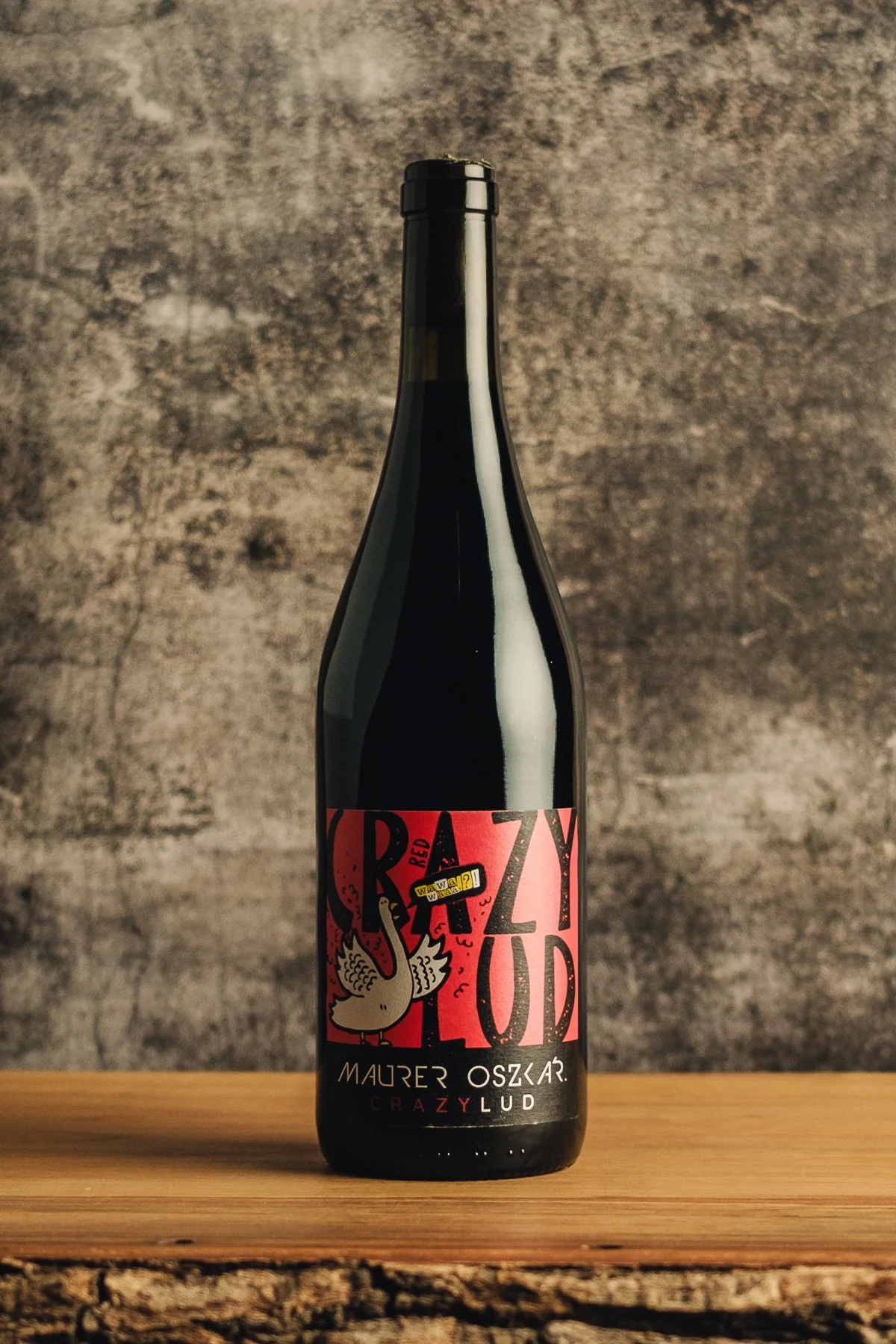
A lively, sun-soaked field blend from Oszkár Maurer that captures the wild energy of the Szerémség hills. The Crazy Lud red opens with bold red berries — black current, cherry —layered with notes of dried herbs, and a whisper of smoke. Medium-bodied and supple, it glides across the palate with silky tannins and a refreshing lift, finishing with a touch of earthy spice that invites another sip. Aged in old Hungarian oak, it marries fruit purity with a gentle rustic edge—unfiltered, unfined, and full of character. The perfect companion for grilled food, sunshine, and good company.
Winemaker | Oszkár Maurer
Region | Szerèmsèg, Serbia
Variety | Blaufrankisch, Prokupac, Cabernet Sauvignon, Kadarka
Viticulture | Organic
Soil | Sand, Alluvial limestone, Clay
Altitude | 50 - 350 m
Age of the vines | 35 years
Bottles made | 7000 bottles
Interesting Facts
Crazy Lud (translates to Goose from Hungarian) is the flagship field blend that serves as an entry into Oszkár’s world. The wine gets its name from the lake next to the vineyards in the Northern part of the country.
A lot of the vineyards in this region are bush-trained and cultivated by horses because no tractor can fit the narrow rows.
Clay instead of wax or foil
Oszkár’s obsession with ancient techniques combined with his rebellious attitude drove him to yet another invention - instead of plastic caps, or artificial waxes, he used clay to seal the top of the bottle. Probably the closest we ever get to the terroir from the comfort of our home.
The opening is as easy as a firm wax - drive the cross crew trough, pull the cork halfway, gently blow/wipe the clay that comes off, pull the cork and enjoy the wine
Vinification
The grapes are grown on old bush-wines resulting in a very low yield. They are hand harvested and de-stemmed soaked for 7 days to extract just the right amount of colour. Later, the juice ferments and ages in 350l old Hungarian oak barrels. The wine gets bottled unfined, unfiltered with a tiny addition of sulphur just before bottling.
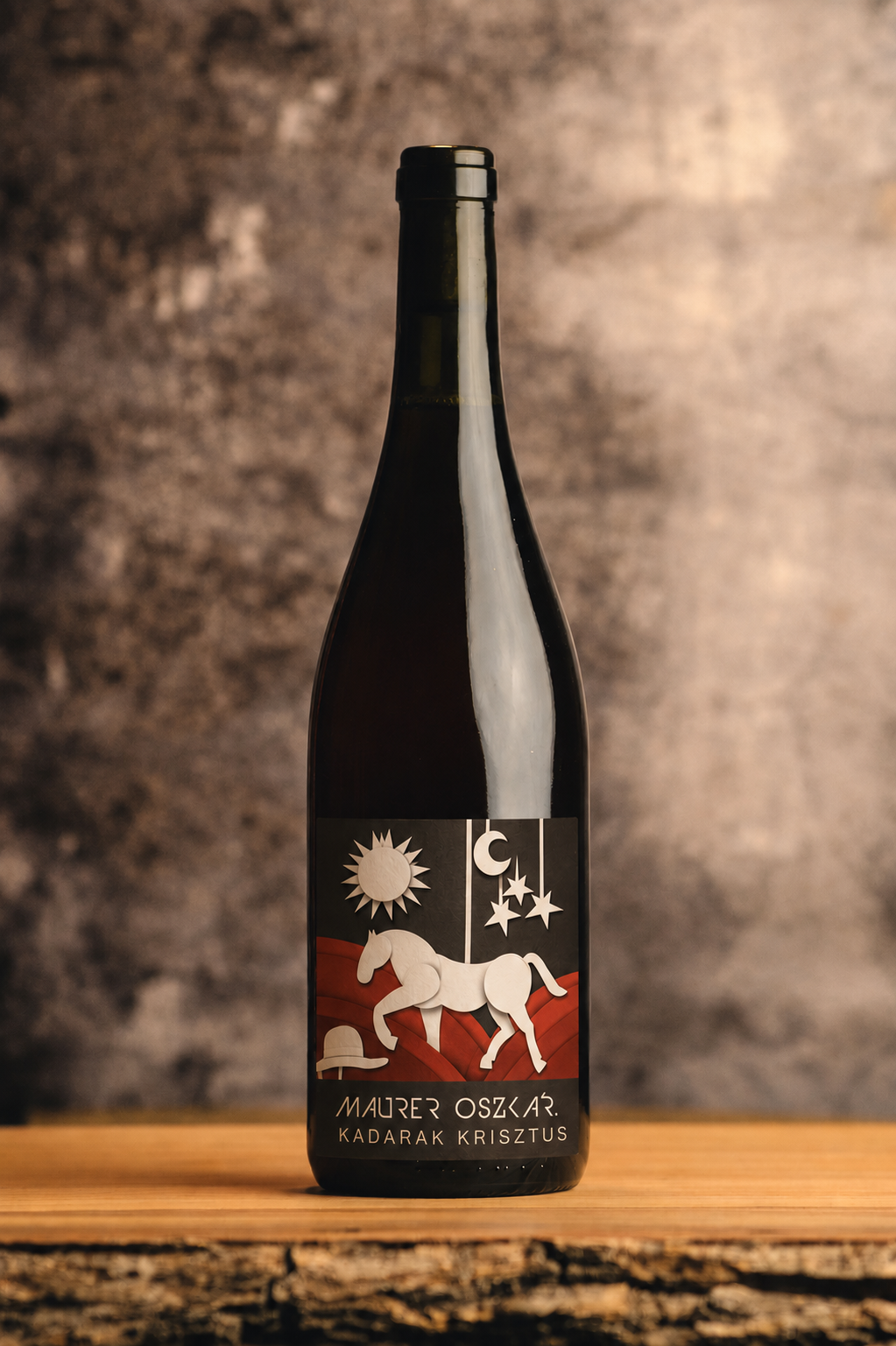
This Kadarka from Oszkár Maurer is a beautifully balanced red that marries depth with elegance. The nose is rich and inviting, with dark fruit aromas of black cherry, plum, and a hint of spice, complemented by subtle earthy undertones. On the palate, it is medium-bodied with soft, velvety tannins that allow the vibrant acidity to shine through, giving it a lively, fresh character. The volcanic and limestone soils contribute a touch of minerality, while the 18 months of aging in old Hungarian oak barrels adds complexity and a soft finish.
Winemaker | Oszkár Maurer
Region | Szerèmsèg - Fruska Gora, Serbia
Variety | Kadarka
Viticulture | Organic certified
Soil | Volcanic bedrock, Alluvial limestone, Clay
Altitude | 150 - 350 m
Age of the vines | 30 - 40 years
Bottles made | 900 bottles
Vinification
The winemaking is focused on preserving the purity of the fruit while allowing the unique terroir of Fruska Gora to shine through. The grapes are grown on old bush vines, resulting in a very low yield of just 0.3 kg per vine, ensuring concentrated flavors. Hand-harvested and de-stemmed, the grapes undergo fermentation in small batches. The wine is aged for 18 months in 350-litre old Hungarian oak barrels, which adds complexity and structure without overpowering the fruit. Bottled unfined and unfiltered, without addition of sulfur, the wine is crafted with minimal intervention, reflecting the character of the volcanic bedrock, alluvial limestone, and clay soils.

The nose opens with elegant and mesmerising notes of ripe sour cherry, rose hip and rhubarb jam paired with delicate violet and freshly ground pepper. The sip is intense, with a long lingering finish and vibrant acidity. Once experienced, there is no escape like a Siren’s song.
Winemaker | Oszkár Maurer
Region | Szerèmsèg - Fruska Gora, Serbia
Variety | Kadarka
Viticulture | Organic certified
Soil | Volcanic bedrock, Alluvial limestone, Clay
Altitude | 150 - 350 m
Age of the vines | 30 years
Bottles made | 900 bottles
Interesting Facts
The crops come from a single vineyard site that was very densely planted with a massal-selection from Oszkar’s oldest Kadarka plantation. The vineyard is surrounded by a forest facing the Danube providing a unique microclimate and the perfect location for organic viticulture.
Vinification
The grapes are grown on bush-wines resulting in a very low yield of 0.3 kg/vines. They are hand-harvested and de-stemmed. Later, the juice ferments and ages in 350l old Hungarian oak barrels for 12 months. The wine gets bottled unfined, unfiltered without the addition of sulphur.
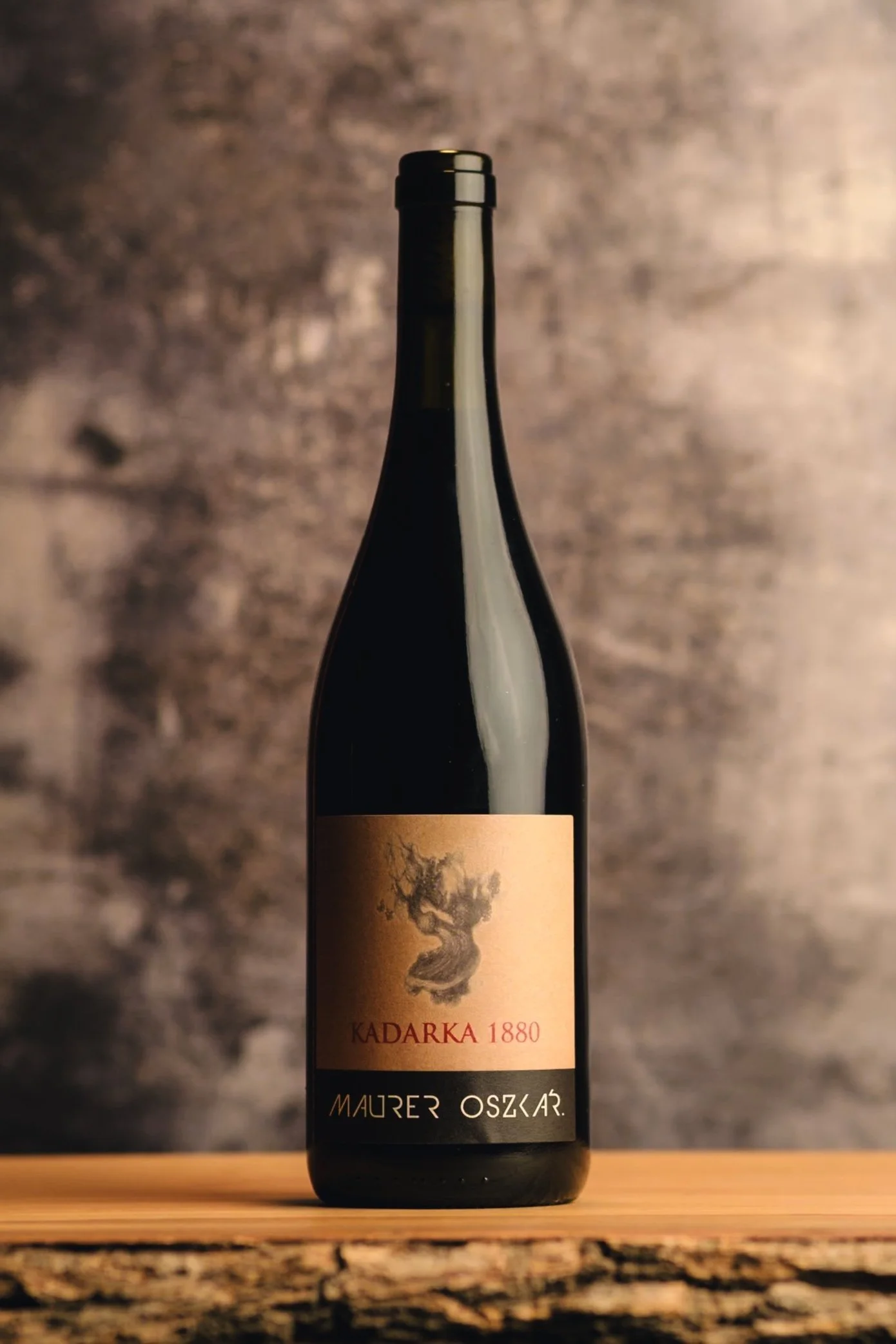
This is not simply great Kadarka—it is one of the world's great heritage wines. Ethereal yet profoundly deep, it opens with soaring aromas of rosehip, wild strawberry, sour cherry and crushed raspberry, laced with dried violet, blood orange, sweet spice and the haunting perfume of ancient vines. The palate is effortlessly weightless but astonishingly persistent, delivering remarkable purity, silky tannins and a mineral energy that seems to flow endlessly. Every detail speaks of its remarkable origin: impossibly old vines rooted in sand, yielding a wine of extraordinary finesse, complexity and longevity.
Once experienced, there is no escape—it lingers in the memory like a Siren's song.
Winemaker | Oszkár Maurer
Region | Subotica, Serbia
Variety | Kadarka
Viticulture | Organic certified
Soil | Sand, Alluvial limestone, Clay
Altitude | 50 - 100 m
Age of the vines | 146 years
Bottles made | 900 bottles
Interesting Facts
The clue is in the name. The vines producing this extraordinary wine were planted in 1880, making this the oldest known Kadarka vineyard on the planet. These are own-rooted, pre-phylloxera Vitis vinifera, preserved thanks to the region's deep sandy soils, which protected them from the devastation that wiped out much of Europe's vineyards in the late nineteenth century.
Today, these ancient bush vines produce tiny yields of intensely concentrated fruit, offering an increasingly rare glimpse into what Kadarka tasted like before phylloxera forever changed European viticulture. This is not only Oszkár Maurer's flagship wine, but one of the most historically significant wines still being made anywhere in the world.
Clay Instead of Wax
Oszkár's fascination with forgotten traditions extends even to the bottle. Rather than using plastic capsules, foil or artificial wax, each bottle is sealed with a layer of natural clay sourced from the vineyard itself—a fitting expression of his philosophy of letting the land speak through every detail.
Opening it is simple: drive the corkscrew through the clay, pull the cork halfway, brush away any loose clay, then remove the cork completely and enjoy.
Vinification
The fruit is harvested entirely by hand before being destemmed and naturally fermented in open-top vats with indigenous yeasts. Around two weeks of gentle maceration extracts the wine's remarkable aromatic complexity and fine tannin structure without sacrificing its trademark elegance. After pressing, the wine matures for twelve months on its fine lees in old Burgundy barrels, allowing texture and depth to develop while preserving the purity of the fruit. Bottled by gravity without fining or filtration and with only a minimal addition of sulphur, it is a transparent expression of one of the world's oldest living vineyards.

This exceptional sweet wine is a direct precursor to vermouth, crafted from botrytised grapes—just like a sweet Tokaj. Infused with a tincture of 10-15 herbs and spices, with wormwood as the dominant element, it delivers a deeply complex profile. The nose is a captivating blend of herbal aromas, complemented by the rich, familiar notes of honeycomb, dried apricot, and a hint of dried orange peel, all reminiscent of Tokaji Aszú’s hallmark sweetness and complexity. On the palate, the natural richness of the Furmint offers smooth honeyed notes, while the herbal bitterness intertwines with flavors of apricot jam, warm spices, and a touch of floral elegance. The finish is long and refined, with a lingering herbal warmth and a slight, pleasant dryness. A sophisticated drink, whether enjoyed neat as an aperitif, paired with dessert, or used in modern cocktails. With its deep-rooted Tokaji connection, this is a must-try for anyone seeking to explore the origins of vermouth, in its purest and most historical form.
Winemaker | Maurer Oszkár
Region | Szerémség - Fruska Gora, Serbia
Variety | Furmint, Welschriesling
Viticulture | Organic
Soil | Volcanic bedrock, Alluvial limestone, Clay
Altitude | 150 - 350 m
Age of the vines | 40 years
Bottles made | 2000
Area farmed | 16 Hectares
Vinification
The winemaking behind this unique creation is deeply rooted in tradition. Oszkár Maurer begins with a sweet base wine made from botrytised berries, which is fermented and then aged for two years in small, old oak barrels to build depth, texture, and complexity reminiscent of Tokaji-style wines.
Separately, a blend of 10–15 herbs and spices—centred around wormwood—is infused into an eau de vie distilled from the same grapes.
Once the base wine has completed its fermentation and ageing, it is fortified with just 1% of this herbal spirit. This small addition protects the wine from refermentation, allowing it to remain unfiltered and free of added sulphur. The result is a vermouth-style wine of remarkable balance and depth, crafted with both tradition and precision.